
I lost a 47-hour base to a trio who waited until 4 AM on a Tuesday to raid me. They blew through my honeycomb, emptied every box, despawned what they couldn’t carry, and left a sleeping bag named “thanks for the sulfur” on my foundation. I sat in my underwear staring at a loading screen, watching my respawn timer tick down, knowing there was nothing left to respawn to.
I was back on the server within an hour, stone hatchet in hand, looking for a new spot to build.
That’s survival PVP. Not the gunfights — those are just Tuesday. The real hook is the persistent stakes, the knowledge that everything you own exists in a world that keeps running when you log off. Your base is your body while you sleep. Your alliances are handshake deals with people who have every incentive to betray you. Your progress is a sandcastle on a beach where other players control the tide.
No other PVP subgenre generates stories like this. Arena shooters give you clutch moments. MOBAs give you comeback narratives. Survival games give you betrayal epics, revenge arcs, and server-wide political dramas that unfold over weeks. The genre’s identity isn’t the combat — it’s the social dynamics that emerge when players share a persistent world where everything is a resource, including trust.
This is a ranked list of the 20 best survival PVP games you can play in 2026. The criteria: depth of PVP interaction, persistence of stakes, quality of the survival loop, and how much the game rewards — or punishes — your social decisions.
The Essentials
1. Rust
Status: Live | Platform: PC, Console | Price: $40
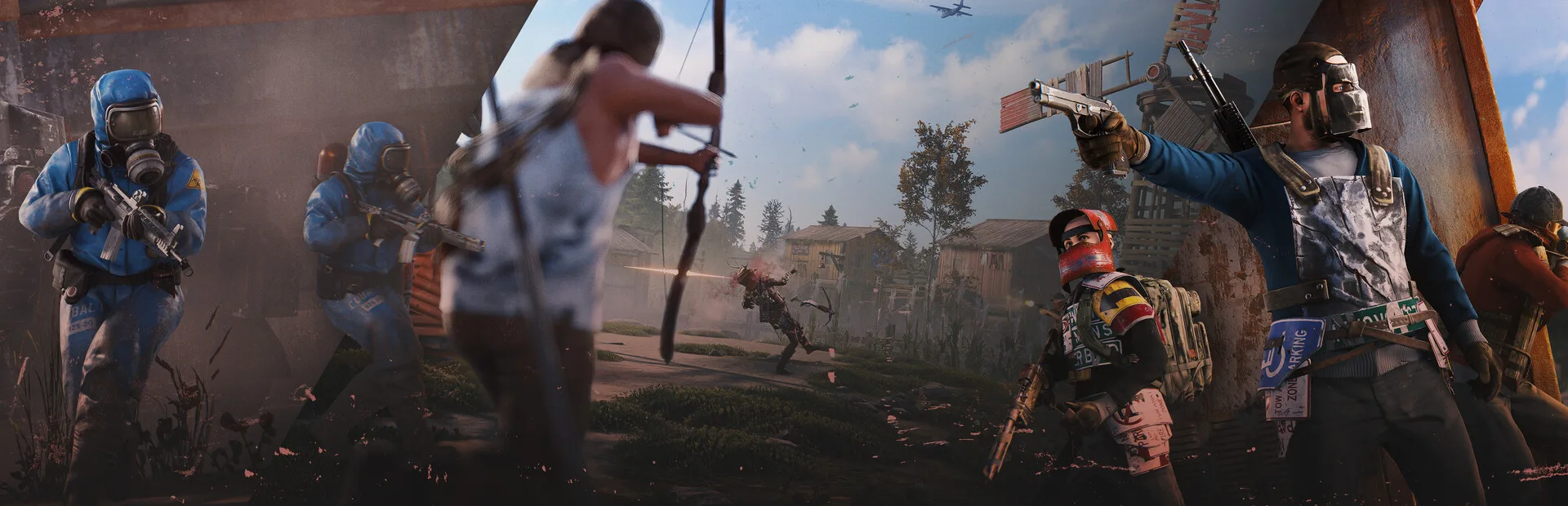
Rust is a social experiment disguised as a PVP game, and after a decade of development, nothing has come close to replicating what it does to the people who play it. Every other survival game on this list borrows from Rust. None of them capture the specific cocktail of paranoia, ambition, and grudging cooperation that a populated server generates in its first 48 hours after wipe.
The base building is a strategy game. The raiding is an economics problem. The gunplay is tight enough to carry a standalone shooter. But the reason Rust sits at number one is the social fabric. Rust creates relationships — alliances, rivalries, trade agreements, protection rackets, neighborly feuds — that emerge organically from systems designed for resource management and violence. The compound next door might be your trading partner for three days and your raider on the fourth. The naked on the beach saying “friendly” might be scouting your base layout for a clan that’s farming sulfur right now.
The wipe cycle prevents stagnation. Weekly or biweekly resets mean every wipe is a fresh political landscape. Early game is bows and spears over a stone node. Mid-wipe is alliance formation and the first raids. Late-wipe is endgame chaos where nothing matters because the slate gets cleaned in two days anyway. Each phase plays like a different game.
Rust’s biggest flaw is also its defining feature: offline raiding. You can lose everything while you’re sleeping. Both sides of the debate are right. Rust doesn’t care. It just hands you a rock and lets you figure it out.
Play this if: You want PVP that doesn’t end when the match does. You find betrayal stories more compelling than kill feeds.
2. ARK: Survival Ascended
Status: Live | Platform: PC, Console | Price: $45
ARK’s pitch sounds like a fever dream — tame dinosaurs, build a fortress, ride a T-Rex into battle against other players’ fortresses. The fact that it creates some of the most memorable PVP moments in gaming is borderline miraculous. Survival Ascended rebuilt everything in Unreal Engine 5, and the visual upgrade matters when a rival tribe rolls up on a fleet of Argentavis with C4 strapped to their saddles.
The taming system separates ARK from everything else. Your combat power isn’t just gear and base — it’s your stable. A tribe with a bred Rex line selectively raised for melee damage over generations has a genuine strategic advantage. Breeding programs are multi-day projects. Losing a high-level tame to a raid isn’t just a gear loss — it’s a genetic investment wiped out.
The caveat: ARK demands unhealthy time investment. Tribes run shifts to keep bases defended around the clock. Server performance varies wildly. Bugs from 2015 persist. But if you have a dedicated group, ARK’s tribal warfare — 50-player battles with mounted dinosaurs, air support, and siege weapons — is unmatched in scale.
Play this if: You want survival PVP at a scale nothing else offers. You have a group willing to commit serious hours.
3. DayZ
Status: Live | Platform: PC, Console | Price: $45
DayZ invented the survival PVP genre. Every other game on this list owes something to what Dean Hall’s mod did in 2012: drop players into a hostile open world with permadeath, scarcity, and no rules about how they treat each other.
The pace is what makes DayZ unique. You might spend an hour looting empty towns, managing hunger and thirst, navigating by compass because the map doesn’t hold your hand. Then you hear footsteps in a building you thought was empty, and every decision you’ve made in that hour suddenly matters. DayZ gunfights are terrifying because you’ve been alive long enough to have something to lose.
The social dynamics are more restrained than Rust but arguably more tense. No base building (without mods), no respawn nearby, no stash to fall back on. The “friendly or not” standoffs — two geared players aiming at each other, neither wanting to shoot first — are a PVP experience you can’t get anywhere else. Server modding keeps the experience fresh a decade later.
Play this if: You want survival PVP where stakes come from permadeath and scarcity. You think tension is more interesting than action.

4. Conan Exiles
Status: Live | Platform: PC, Console | Price: $40
Conan Exiles spent years in Rust’s shadow. Then the Age of War updates happened, and Funcom rebuilt the PVP systems into something that deserves serious attention. The combat overhaul, the purge rework, the balance passes — each update sharpened the experience.
The melee combat is the standout. Where Rust and ARK treat melee as a fallback, Conan makes it central. Stamina management, dodge mechanics, and weapon movesets create a fighting system closer to Dark Souls than Minecraft. PVP duels in Conan are genuinely skilled combat — most survival games have terrible melee, and Conan’s is the best in the genre.
The Thrall system lets you capture NPCs and station them as base defenders. A well-staffed fortress with leveled Thralls and archers on the walls is a serious defensive investment. And the building system is the most aesthetically satisfying in the genre — your base can actually look good, which matters more than it sounds after 200 hours in concrete bunker simulators.
Play this if: You want survival PVP with the best melee combat in the genre. You want bases that look impressive, not just functional.
5. V Rising
Status: Live (1.0) | Platform: PC | Price: $35
Stunlock Studios — yes, the Battlerite developers — made a vampire survival game, and it’s brilliant. V Rising’s 1.0 release refined every system into arguably the most accessible survival PVP on this list without sacrificing depth.
The isometric ARPG-like combat is immediately readable — you can actually see what’s happening in a PVP fight. The ability loadout system, with powers stolen from bosses, creates build diversity that most survival games completely lack. Castle hearts create natural territory conflict, and siege windows limit when your base can be attacked — solving the 3 AM raid problem without removing raiding entirely.
The production quality is several tiers above genre expectations. Stunlock’s arena PVP pedigree shows in every combat interaction.
Play this if: You want survival PVP with tight combat and reasonable time investment. You want siege windows that protect your sleep schedule.
The Deep Cuts
6. SCUM
Status: Early Access | Platform: PC | Price: $35
SCUM’s simulation depth is unmatched. Your character has a metabolism tracking individual nutrients. You can die from vitamin C deficiency. Physical performance changes based on body composition — you can literally get fat, and it affects gameplay.
This isn’t a gimmick. A player who’s been eating balanced meals and staying fit has a measurable combat advantage over someone subsisting on canned food. The gunplay is realistic enough to make PUBG look arcadey — ballistics model wind, real bullet drop, and firearms jam if poorly maintained. Gunshot wounds cause bleeding and infection, not just HP loss.
PVP on SCUM servers is slower, more methodical, and more consequential than Rust. The complexity is a barrier, but for players who want survival simulation at its logical extreme, nothing else comes close.
Play this if: You think “your character has a digestive system” is a feature, not a joke.
7. Palworld
Status: Live | Platform: PC, Console | Price: $30
The “Pokemon with guns” meme carried Palworld’s marketing, but the game underneath is a genuinely solid survival experience with creature taming, base building, and PVP servers where all of it intersects. Pals function as both combat allies and base workers — a PVP raid means fighting both the defending player and their stationed creatures.
What Palworld does better than ARK is accessibility. You can be PVP-relevant within hours. The quality-of-life features ARK has struggled with for years — inventory management, creature organization, map navigation — Palworld got right on the first try. PVP balance is a work in progress, but the foundation is strong and the player base is enormous.
Play this if: You want ARK’s creature-taming PVP without ARK’s time investment.
8. Myth of Empires
Status: Live | Platform: PC, Console | Price: $40
Where most survival games are about small groups defending a single base, Myth of Empires is about guilds controlling territory across a massive map, taxing trade routes, and fielding armies. Cavalry charges into infantry formations. Trebuchets lobbing stones at castle walls. Shield walls holding chokepoints while archers fire from battlements.
The progression system creates real interdependence — a guild needs dedicated crafters, warriors, and diplomats. Server performance under load is inconsistent, but when it works, the PVP grandeur is unmatched in the genre.
Play this if: You want survival PVP at the civilization scale. You have a guild willing to specialize.
9. Valheim
Status: Live (1.0) | Platform: PC, Console | Price: $20
Valheim is primarily PvE, and anyone telling you otherwise is running a modded PVP server. But it earns its spot because the PVP community plays one of the most mechanically satisfying combat systems in any survival game. Stagger mechanics, parry timing windows, stamina management, weapon-specific movesets — a buckler parry-riposte into a mace combo is the kind of play you’d expect from a dedicated action game, not a crafting sandbox.
The game isn’t balanced for PVP and the server tools don’t have built-in PVP rulesets. Everything PVP in Valheim is community-built. But with the right mods, the combat is more enjoyable than games designed for PVP from the ground up.
Play this if: You want Norse survival with combat that’s better than it has any right to be.
10. 7 Days to Die
Status: Live (1.0) | Platform: PC, Console | Price: $45
7 Days to Die finally hit 1.0 in 2024 after over a decade of Early Access. The core concept: a zombie survival game built around a 7-day horde cycle. Every seventh night, a massive horde attacks your base.
The PVP twist is what makes it special. On PVP servers, other players might attack during horde night when you’re already fighting for your life. Do you raid someone on day 6, hoping they can’t rebuild before the horde? Do you help neighbors survive horde night and then rob them on day 1? The voxel building system allows structural integrity calculations — find the load-bearing wall, break it, watch three floors of loot cascade down.
Play this if: You want PVP that revolves around a shared PvE threat. You appreciate structural engineering as a combat skill.
The Niche Picks
11. The Forest / Sons of the Forest
Status: Live | Platform: PC, Console | Price: $30 (Sons)
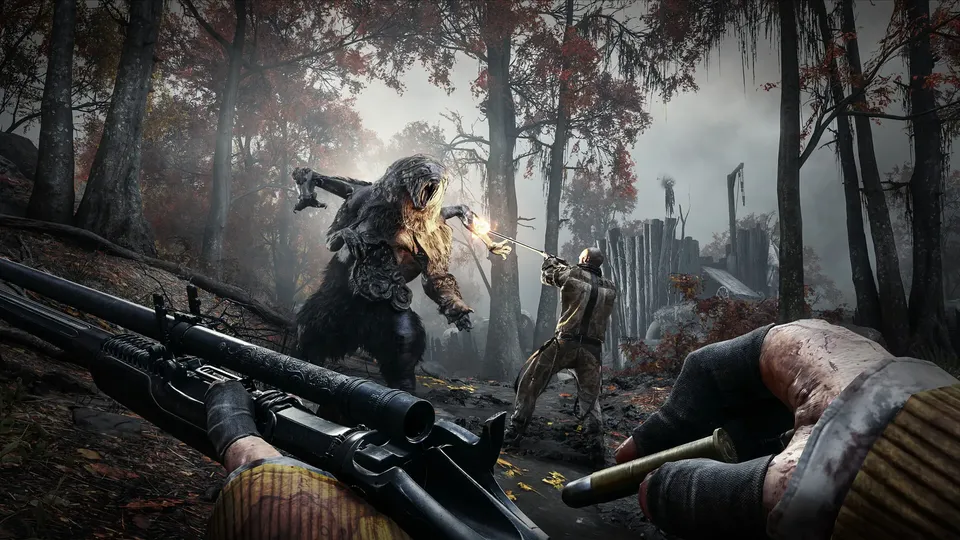
The Forest games were designed as co-op horror, but the PVP community turned them into tense atmospheric survival combat. What makes it different is the environment. You’re fighting other players in a cannibal-infested forest where mutants emerge from caves at night. Gunshots attract things arguably worse than enemy players. Two players fighting over a loot drop might suddenly need to cooperate when a Virginia shows up.
PVP balance isn’t the focus, but the atmosphere — rain dripping through trees, distant screams, the flashlight giving away your position — creates uniquely tense encounters.
Play this if: You want survival PVP with genuine horror atmosphere.
12. Unturned
Status: Live | Platform: PC | Price: Free-to-play
The best free survival PVP game ever made, created by a teenager. Nelson Sexton built this at 16, and despite the Roblox-adjacent art style, the PVP systems are deeper than most AAA survival games. Raiding follows Rust-like principles, vehicles add mobile raiding strategies, and the modding community has essentially built a dozen different games inside Unturned’s framework.
For a generation of players, this was their first survival PVP experience. That matters more than production value.
Play this if: You want survival PVP with zero financial barrier and one of the most active modding communities in the genre.
13. Deadside
Status: Early Access | Platform: PC | Price: $20
Deadside strips survival PVP to fundamentals: guns, loot, bases, other players. No dinosaurs, no magic. The gunplay is weighty and accurate. The ballistic model rewards good aim. The audio design lets you triangulate shooter positions from the crack of a rifle.
The criticism is fair: Deadside doesn’t innovate. If you’ve played Rust or DayZ, you’ve seen everything it offers in a different setting. But sometimes competent execution of familiar systems is exactly what you want.
Play this if: You want military survival PVP without the complexity of SCUM or the time investment of Rust.
14. Soulmask
Status: Early Access | Platform: PC | Price: $25
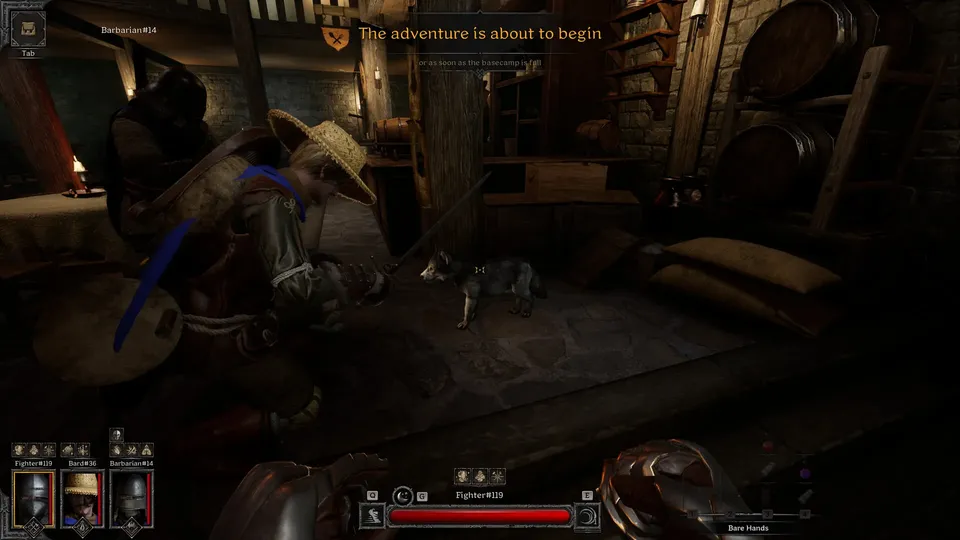
Soulmask blends tribal survival with NPC follower management in a way that feels fresh. Your tribespeople farm, craft, fight, and defend your base when you’re offline. Building a strong tribe means recruiting NPCs with good stats, training them, equipping them, and stationing them strategically. A raid against a developed tribe means fighting an organized AI defense force, not just breaking walls.
The combat borrows souls-like stamina management and dodge rolls. It’s early and rough around the edges, but the tribal NPC system creates a PVP dynamic no other game offers.
Play this if: You want a survival PVP game genuinely trying something new.
15. HurtWorld
Status: Live | Platform: PC | Price: $25
HurtWorld tried to be “Rust but faster” and partially succeeded, compressing the progression curve into shorter play sessions. The vehicle system is the standout — cars and trucks aren’t just transportation but mobile storage, raiding tools, and status symbols. Environmental hazard zones gate resources behind gear requirements, adding strategic layers to PVP encounters.
The player base is small, which is the recurring problem for small PVP games that deserve better. The core is good. The population isn’t.
Play this if: You want Rust-style PVP with faster progression and vehicles as a central mechanic.
The Frontier
16. Last Oasis
Status: Live (limited) | Platform: PC | Price: $30
The most ambitious failure on this list, and I mean that with genuine respect. Donkey Crew built a nomadic survival game where your base walks with you on wooden mechs. Clan warfare happens between fleets of walkers clashing in the desert — grapplers swinging between ships, ballistas firing, boarders fighting on enemy decks. Nothing else in gaming looks like this.
It struggled because execution couldn’t match ambition. Server technology couldn’t handle the scale. Population and matchmaking problems killed what should have been a genre-defining game.
Play this if: You want the most original concept in survival PVP and can tolerate rough edges for moments of brilliance.
17. Icarus
Status: Live | Platform: PC | Price: $35
Icarus does something different: session-based survival. You drop onto an alien planet for timed missions. When the timer expires, you extract or lose your gear permanently. It’s survival meets extraction shooter philosophy.
PVP servers add tension to an already tense structure — competing with players for mission objectives while managing resources, weather, and wildlife on a clock. Dean Hall’s second survival game (after DayZ) shows growth as a designer, and the session structure respects your time in a way persistent survival games fundamentally don’t.
Play this if: You want survival stakes without permanent time investment.
18. Miscreated
Status: Live | Platform: PC | Price: $25
Miscreated is the DayZ alternative that never broke through. Post-apocalyptic scavenging, base building, and constant player threat in one of the most carefully crafted maps in the genre. What it does well is mood — clearing a dark building with a flashlight, rain hammering the roof, lightning through the windows, knowing another player could be around any corner.
The problem is population. It never found its audience in a market dominated by Rust and DayZ. On the right server, it’s genuinely enjoyable. Finding that server is the challenge.
Play this if: You value mood and immersion over mechanical innovation.
19. Subsistence
Status: Early Access | Platform: PC | Price: $25
The survival PVP game for people who think Rust is too forgiving. This solo-dev project makes progress painfully slow — building a functional base takes days of real effort. Losing it means genuinely starting over. In Rust, dying means losing maybe an hour of farming. In Subsistence, losing your base can mean losing a week.
The result is PVP encounters that carry devastating weight despite low player counts. A niche within a niche, but the players who love it are fiercely loyal.
Play this if: You think modern survival games are too fast. You want encounters that are rare but devastating.
20. Reign of Guilds
Status: Early Access | Platform: PC | Price: $20
The most experimental entry on this list — guild-based territory control merged with survival crafting in a medieval MMORPG framework. Territory control determines resource access, which determines crafting capability, which determines military strength. It’s a closed economic loop where PVP success feeds directly into PVP capability.
It’s rough. Production quality is below everything else here. The player base is tiny. But the concept — survival crafting as the economic engine for guild-based MMO PVP — is sound, and there’s nothing else quite like it.
Play this if: You want survival PVP with MMO-style guild warfare and can tolerate Early Access roughness.
The Genre’s Identity
Looking at all 20 entries, a few things become clear.
The social dynamics are the product. The combat in most survival games ranges from adequate to good. But the reason people come back after losing everything at 3 AM is the stories — the alliances, betrayals, server politics, revenge raids planned over Discord for three days. No other PVP subgenre generates these narratives because no other subgenre creates the conditions for them: persistent worlds, player-built stakes, and the freedom to cooperate or destroy.
Offline raiding is the genre’s original sin. Almost every game struggles with the asymmetry between build time and destroy time. V Rising’s siege windows are the most elegant solution. Rust’s wipe cycle is the brute-force approach. DayZ sidesteps it by not having bases. Nobody has fully solved “I built for 40 hours and lost it in 40 minutes while I was at work.”
Time investment is the barrier. The best PVP games in 2026 let you play a match in 30 minutes. Survival PVP demands hours, days, sometimes weeks before the PVP layer becomes relevant. This will always limit the audience, and that’s fine. Some experiences are worth the cost of entry.
The genre is healthier than it looks. Rust is stronger than ever. ARK’s UE5 rebuild brought players back. V Rising proved the formula works outside the Rust/ARK mold. Palworld showed the genre can go viral. DayZ still pulls 30,000 concurrent players a decade later. For a subgenre people have declared dead since 2018, survival PVP is doing fine.
If you want the best survival PVP right now, the top three are clear: Rust for social warfare, ARK for scale, DayZ for tension. V Rising is the best option for players who want it without the crushing time investment. And somewhere in the bottom half of this list, there’s a small game that deserves more players — and if you find it, the community will be better for your arrival.
For our full ranked list across all PVP genres, check out The Best PVP Games to Play in 2026.

Discussion