
Four days in and First Stand 2026 already has a finals script written. Gen.G remain untouched — a perfect, surgical run through every team they’ve faced. JDG look like they’ve been sharpened in a different dimension entirely, dismantling opponents with a level of coordination that borders on disrespectful. And the rest of the world? Scrambling.
Day 4 didn’t just shake up the standings. It crystallized a truth that the international League of Legends community has been desperately trying to deny: the gap isn’t closing. It’s becoming a canyon.
Gen.G: The Machine That Doesn’t Flinch
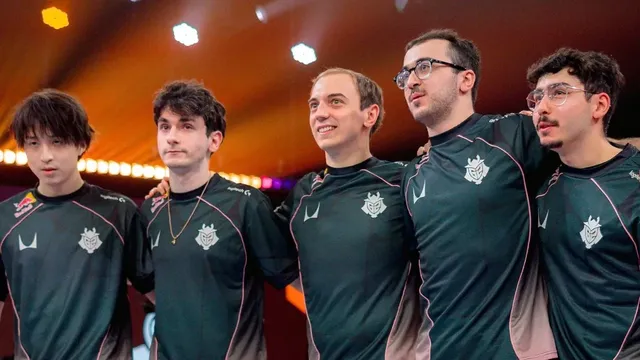
Gen.G came into First Stand 2026 as heavy favorites and they’ve spent four days proving that the label was, if anything, conservative. Their Day 4 performances weren’t just wins — they were statements of total control.
What makes Gen.G terrifying isn’t raw mechanical outplay, though they have that in abundance. It’s the suffocating macro. They never give you an angle. Every rotation is preemptive. Every vision line is contested before you even think about contesting it. Teams aren’t losing to Gen.G because they’re getting outskilled in lane — they’re losing because Gen.G has already decided where the game ends before the 15-minute mark.
Their draft flexibility has been equally oppressive. Across Day 4, Gen.G showed willingness to play through every lane, forcing opponents into an impossible preparation puzzle. You can’t target ban a team that has four viable win conditions.
The most damning stat? Average game time. Gen.G aren’t going late. They’re closing games with the ruthless efficiency of a team that views drawn-out matches as a personal insult. If you’re bleeding out at 22 minutes against Gen.G, that’s not a close game — that’s them taking their time.
JDG: The Redemption Arc Nobody Was Ready For
If Gen.G are a machine, JDG are a scalpel. Their Day 4 showing wasn’t just a return to form — it was a reinvention.
JDG’s 2023 Worlds Finals run feels like ancient history after some turbulent rebuilding years, but whatever alchemy their coaching staff performed this offseason has produced something genuinely frightening. Their teamfighting on Day 4 was the best we’ve seen from any team at this tournament — maybe the best we’ve seen from any team this year, period.
The coordination in mid-game skirmishes was frame-perfect. Cooldowns layered with zero overlap. Engage tools chained so seamlessly that the receiving team never had a clean window to respond. This isn’t just five good players on the same page — this is a team that’s drilled these exact scenarios hundreds of times and can execute them under international stage pressure without blinking.
Their draft philosophy has also been fascinating. JDG have been leaning into tempo-heavy compositions that demand proactive play, and they’ve been executing them flawlessly. Where most teams default to safe scaling when the stakes are high, JDG are choosing violence — and winning.
The LPL faithful on Weibo are already calling this the strongest JDG roster since their 2023 peak. After Day 4, it’s hard to argue.
The Rest of the World: Same Script, Different Year
Here’s where it gets uncomfortable.
First Stand 2026 was supposed to be different. Riot’s tournament restructuring, offseason roster shuffles, a new competitive calendar designed to create more meaningful international touchpoints — all of it was framed as a chance to level the playing field. Day 4 buried that narrative in a shallow grave.
Western teams — both LEC and Americas representatives — have looked lost against top-tier Eastern competition. Not outclassed in the “they’re slightly better” sense. Lost in the “we are playing a fundamentally different game” sense.
The specific failures are damning:
- Draft gaps: Western coaching staffs are consistently getting outdrafted. They’re arriving at the tournament with rigid champion pools and predictable priority lists, and LCK/LPL teams are exploiting those tendencies from champ select.
- Mid-game decision making: The window between laning phase and first major objective fight is where Western teams hemorrhage leads. Even when they secure early advantages, they have no idea how to convert them against teams that punish every misstep.
- Mental fortitude: You can see it in the gameplay. Once a Western team falls behind against Gen.G or JDG, the mistakes compound. Desperation plays. Uncalculated dives. The kind of decisions that scream “we don’t believe we can win this.”
- Tempo mismatches: Eastern teams are playing at a pace that Western squads simply can’t match. The game speed difference is visible to the naked eye.
The PCS and minor region representatives have actually shown more fight in some cases, which is either a testament to their improvement or a damning indictment of where the Western leagues are right now. Probably both.
The Meta Gen.G and JDG Are Defining
Pay attention to what these two teams are prioritizing, because it’s going to be the entire tournament meta within 48 hours — and it’ll bleed into your ranked games within the week.
Both Gen.G and JDG have shown heavy preference for early-to-mid game agency in their compositions. Long, passive scaling games are dead at the top level of this tournament. The teams that are winning are the teams that can generate advantages before 15 minutes and have the teamfight tools to end games by 25.
A few trends from Day 4 worth noting:
- Jungle tempo is king. Both teams are drafting junglers with strong early gank pressure and objective control. If you’re playing a farming jungler at this tournament, you’re playing from behind.
- Support roaming has reached a new peak. The vision game from Gen.G and JDG’s support players has been next-level — we’re talking about supports that are functionally second junglers in the early game.
- Mid lane flex picks are warping draft. Both teams have leveraged mid lane champion pools that force opponents into uncomfortable blind picks or wasteful target bans.
- Bot lane agency matters. Passive ADC play is getting punished. The winning bot lanes are the ones that can generate their own leads without jungle intervention.
Expect solo queue to be a disaster of people trying to replicate these strategies without the coordination to pull them off. You’ve been warned.
The Gen.G vs. JDG Collision Course
Let’s address the elephant in the room: the real finals is Gen.G vs. JDG, and we all know it.
Barring a catastrophic implosion from either team — which nothing in their play suggests is remotely possible — these two are on a collision course for the tournament’s decisive match. Every other series is a formality. A warm-up. Content for the highlight reel on the way to the only matchup that actually matters.
And what a matchup it could be. Gen.G’s methodical, suffocating macro against JDG’s explosive teamfighting. Two completely different philosophies of how to win a game of League of Legends, both executed at the highest possible level. It’s the kind of stylistic clash that could produce an all-time great series.
The question isn’t whether it’ll happen. It’s whether anyone can take a single game off either of them before it does.
This Isn’t a Narrative Problem — It’s a Structural One
Here’s the hot take, and I’m not going to sugarcoat it: format changes cannot fix competitive imbalance that is rooted in infrastructure, practice culture, and talent pipeline depth.
Riot can restructure the calendar. They can add more international events. They can tinker with seeding and group draws until the end of time. None of that addresses the fundamental reasons why LCK and LPL teams consistently outperform the rest of the world.
Korean and Chinese players practice more, in better competitive environments, against better opposition, with coaching staffs that are more analytically rigorous. Their solo queue is harder. Their amateur-to-pro pipelines produce more talent. Their organizations invest more seriously in long-term player development.
Western teams aren’t losing because of bad luck or unfavorable formats. They’re losing because the ecosystem that produces them is structurally inferior, and no amount of copium about “competitive losses” or “we were close” changes that reality.
First Stand 2026 Day 4 made this painfully, undeniably clear.
What Day 5 Needs to Prove
Day 5 is where this tournament either produces a legitimate challenger narrative or confirms what Day 4 already told us. Here’s what to watch for:
- Can anyone take a game off Gen.G or JDG? Not a series — a single game. That’s the bar right now.
- Will any Western team adapt their drafts? The teams that showed up with rigid preparation have been exposed. The ones that can adjust in real-time have a chance to salvage respectability.
- Does the meta shift in response to Day 4? Smart teams will have been in VOD review until 3 AM. The question is whether anyone can formulate a counter-strategy in 24 hours.
- Dark horse emergence? If there’s a team capable of disrupting the Gen.G/JDG duopoly, they need to show it now. The window is closing.
Gen.G and JDG have set the standard. Day 5 will tell us whether anyone else is even playing the same game — or if First Stand 2026 is already a two-horse race with 12 spectators.
Discussion