Before Twitch. Before League of Legends. Before anyone thought playing video games could fill a stadium — two guys named their Half-Life mod on ICQ, and everything changed.
The Mod (1999–2001)
In 1999, Minh “Gooseman” Le was a Vietnamese-Canadian university student spending more time modding Quake than going to class. He’d already created the Navy SEALs mod, and through the Action Quake 2 community he met Jess Cliffe, who ran a website. Together, over an ICQ chat, they named their project: Counter-Strike.
Beta 1 dropped on June 19, 1999 — hostage rescue, nine weapons, four maps, one player model per side. It was rough. It was beautiful. Le was pouring twenty hours a week into the mod, more than his coursework. By Beta 4, Valve noticed. By 2000, they’d acquired the IP entirely.
Counter-Strike didn’t need a marketing campaign. Internet cafes did the work. de_dust, de_dust2, de_inferno, de_nuke — these maps became sacred ground. Low system requirements meant anyone with a PC could play. And everyone did.
The Golden Age (2001–2007)
The Cyberathlete Professional League was the cathedral of early Counter-Strike. CPL Summer and Winter championships in Dallas, Texas, with five-figure prize pools that felt like millions. This was before sponsorship decks and brand deals — just players, CRT monitors, and tangled ethernet cables.
In Sweden, a team called Ninjas in Pyjamas was rewriting what was possible. HeatoN’s AK spray control was a thing of legend — not flashy flicks, but a surgeon’s precision that carved through entire teams. Alongside Potti, widely regarded as one of the three greatest 1.x players ever, NiP set the standard.
Then came SK Gaming, who absorbed NiP’s core talent and proceeded to win seven CPL gold medals between 2002 and 2005. In a four-month stretch in 2003, SK earned one percent of all CS 1.6 prize money ever awarded. SpawN — Abdisamad Mohamed — had pistol aim that defied physics. His aces weren’t highlight reels; they were inevitabilities.
But this wasn’t just a European story. Across the Atlantic, Team 3D and compLexity were proving that North America belonged at the table. Team 3D, led by the tactical mind of Rambo and the AWP of Ksharp, won CPL Winter 2002 and back-to-back WCG titles in 2004 and 2005. CompLexity — fRoD, Storm, sunman, tr1p, Warden — answered with the only North American ESWC victory in history, taking the crown in 2005. The coL vs SK rivalry at CPL defined what NA vs EU meant before the phrase even existed.
In Norway, eoLithic emerged as another force — DarK, XeqtR, elemeNt — ranked above Team 3D in 2003 Elo ratings. The competitive ecosystem was deep, global, and ruthless.
The Legends (2005–2009)
Some players transcended their teams. They became the reason you watched.
Filip “NEO” Kubski was the crown jewel of the Golden Five — the Polish lineup of NEO, TaZ, loord, kuben, and LUq that competed under Pentagram, then MYM, then ESC Gaming. They stayed together as a five-man unit for four years and dominated everything: WCG 2006, ESWC 2007 and 2008, WCG 2009, the first-ever Intel Extreme Masters. NEO’s movement, his mechanics, his gamesense — he is the consensus best CS 1.6 player in every measurable sense. Their story later inspired a Polish filmmaker to create a movie about their journey.
Then there was f0rest. Patrik Lindberg, simply unrivaled in his prime. Dominant with a rifle, unbridled confidence backed up with results every single time. Part of the consensus top-three greatest 1.x players alongside Potti and NEO. He’d carry this legacy forward into an entirely new game.
The Dark Ages (2004–2012)
In November 2004, Valve released Counter-Strike: Source on their new engine. Better graphics. Ragdoll physics. And the community split in half.
The competitive scene rejected Source almost unanimously. The recoil felt wrong. The maps had too many visual distractions — in 1.6, only walls and crates got in your way, and that was the point. The hardcore scene stayed on 1.6. Source got its own smaller competitive community, but the unified front was broken.
Then came the CGS — the Championship Gaming Series, backed by DirecTV in 2007. Professional salaries. Mandated Counter-Strike: Source. It lasted two seasons before folding entirely, damaging the Source scene’s credibility and leaving players stranded.
CS 1.6 continued, but prize pools stagnated. The FPS esports crown was contested by rising titles. The community fragmented between loyalists and those who’d moved on.
But the faithful waited. They knew Counter-Strike would return.
The Resurrection (2012–2013)
On August 21, 2012, Counter-Strike: Global Offensive launched. The 1.6 veterans were skeptical. The Source players were wary. Nobody knew if this was another split or the real thing.
Then Ninjas in Pyjamas answered the question for everyone.
f0rest and GeT_RiGhT — two 1.6 legends — transitioned into CS:GO and assembled a roster with Xizt, friberg, and Fifflaren. What followed was the most dominant run in competitive FPS history: 87 consecutive map wins on LAN. Sixty matches without a loss, from September 2012 to April 2013. DreamHack Winter, AMD Sapphire, THOR Open, NorthCon, Mad Catz, TECHLABS Cup, Copenhagen Games — they won everything.
GeT_RiGhT’s lurking style didn’t just win rounds; it defined an entirely new role. He was a ghost on the server, appearing behind enemy lines with a timing that felt supernatural.
The streak ended when Virtus.pro beat them on April 5, 2013. That record will never be matched.
In 2013, Valve launched the first official Major at DreamHack Winter with a $250,000 prize pool. Valve’s stamp of legitimacy transformed CS:GO from “another version” into THE version. The sticker system gave teams direct revenue from fans. Counter-Strike was back, and this time it had infrastructure.
The Arms Race (2014–2016)
What followed was controlled chaos.
Fnatic — olofmeister, JW, flusha, KRIMZ, pronax — became the first team to win back-to-back Majors, claiming three total. JW’s fearless AWPing and flusha’s uncanny reads broke opponents mentally before the pistol round started.
Then came THE OLOFBOOST. DreamHack Winter 2014, quarterfinal on Overpass. Fnatic down 3-12 against LDLC. Three players stack on each other’s heads, launching olofmeister to a position that sees nearly the entire map. Thirteen rounds won in a row. Map taken 16-13. LDLC protested — pixel walking, invisible ledges, texture transparency exploits. DreamHack ruled it illegal. Fnatic forfeited rather than replay. LDLC advanced and won the Major. It remains the most controversial moment in Major history.
Meanwhile, kennyS was doing things with the AWP that shouldn’t have been possible. On Titan, his rapid flicks and ultra-aggressive rushes into angles turned the weapon into an assault rifle. Commentators started calling it “kennyS’s gun.” In March 2015, Valve drastically nerfed scoped movement speed — widely seen as a direct response to one player. He was never the same. So good they changed the game because of him.
At EMS One Katowice 2014, Virtus.pro — featuring 1.6 Golden Five legends TaZ and NEO alongside pashaBiceps, Snax, and byali — won the Major on home soil in Poland. The Spodek Arena erupted. PashaBiceps hoisting the trophy with one arm became one of the most iconic photographs in esports history. They held together for four years, five months, and one day — the longest-lasting lineup in CS:GO history.
The Brazilian Dream (2016)
Gabriel “FalleN” Toledo didn’t just play Counter-Strike. He built an entire scene from the ground up.
In Brazil, competitive CS grew in LAN houses — internet cafes where teenagers split hourly PC time. FalleN organized tournaments, created educational content, coached, and played. He was the Godfather of Brazilian Counter-Strike before the term existed.
With coldzera, fer, TACO, and fnx under the Luminosity Gaming banner, FalleN led the most improbable championship run in CS:GO history. They won MLG Major Columbus 2016 — and then, after switching to SK Gaming, won ESL One Cologne 2016. The only roster to win consecutive Majors under two different organizations.
But one moment defined it all. MLG Columbus semifinal, Luminosity versus Team Liquid, Round 25. Coldzera jumps through smoke on Mirage B Apartments. Mid-air, no scope, AWP. A collateral kill — EliGE and s1mple erased with one bullet. Then he no-scopes nitr0. A jumping no-scope collateral is next to impossible. It sparked a ten-round comeback from 9-15 to win 19-15 in overtime.
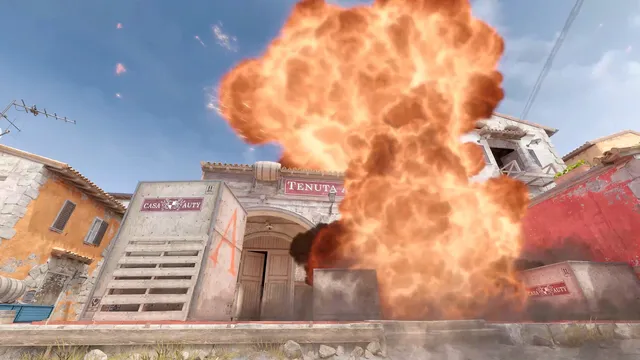
Valve immortalized it with a graffiti on Mirage’s B-site. It’s still there. Permanent. A monument to the most iconic play in Counter-Strike history.
Coldzera was named HLTV’s #1 player in both 2016 and 2017. FalleN and coldzera are national heroes in Brazil.
The Perfect Machine (2018–2019)
Astralis wasn’t a team. It was a system.
Device, dupreeh, Xyp9x, gla1ve, and Magisk, coached by zonic, won three consecutive Majors: FACEIT London 2018, IEM Katowice 2019, StarLadder Berlin 2019. No team before them had done it. No team has done it since.
They redefined how Counter-Strike was played. Their utility usage set new standards across the entire professional scene — smoke placements calculated to the pixel, flash timings synchronized to the millisecond, molotov lineups that turned bombsites into death traps. Nothing was left to chance.
They also won DreamHack, ESL Pro League, ECS, BLAST, ELEAGUE, IEM, and the first Intel Grand Slam. The dynasty eventually crumbled under the weight of burnout and internal fractures — device left in 2021, dupreeh and Magisk in 2022. But for two years, they were the closest thing competitive gaming has ever seen to perfection.
The GOAT (2016–2021)
Oleksandr “s1mple” Kostyliev is widely considered the greatest Counter-Strike player of all time.
Twenty-one HLTV MVP medals. HLTV #1 player in 2018, 2021, and 2022. Voted Player of the Decade by a panel of 75 top CS:GO professionals. His highlight reel is longer than most players’ entire careers.
At ESL One Cologne 2016, alone against two terrorists on Cache, s1mple drops from Heaven on B-site and lands a falling AWP no-scope on dennis mid-air, then no-scopes KRIMZ. The crowd erupted like Ukraine had won the World Cup. Valve gave him his own graffiti on Cache — the second of only two players in history to receive one.
But for years, the greatest player in the world couldn’t win a Major. The narrative of “s1mple without a trophy” haunted him. It was the gap in an otherwise perfect resume.
PGL Major Stockholm 2021 changed everything. Na’Vi became the first team to win a CS:GO Major without dropping a single map. S1mple was named Major MVP. He’d also won the Intel Grand Slam — a million dollars across IEM Katowice, DreamHack Masters, IEM Cologne, and ESL Pro League. The emotional payoff of years of being the best without the one thing that mattered.
The Dark Side
Not every chapter of Counter-Strike’s story is triumph.
On August 21, 2014, iBUYPOWER — the best North American team — lost 16-4 to NetCodeGuides.com in a match where they were massive favorites. The play was suspicious. Journalist Richard Lewis exposed the scheme: players had bet against themselves using weapon skins on CSGO Lounge. DaZeD, steel, swag, AZK — lifetime bans from all Valve events. Swag was seventeen years old. Ten years later, in January 2025, they were finally unbanned. Careers destroyed. Talent wasted. A cautionary tale.
Then came the gambling epidemic. CSGO Lounge and dozens of sites let users bet weapon skins with real monetary value. In July 2016, YouTubers TmarTn and ProSyndicate were revealed to own CSGO Lotto — a gambling site they promoted to ten million subscribers without disclosure. Videos titled “HOW TO WIN $13,000 IN 5 MINUTES” — on their own site. Valve sent cease-and-desist letters to twenty-three gambling operations. The FTC settled its first-ever action against social media influencers. A class-action lawsuit was filed against Valve under federal racketeering laws. It exposed how Counter-Strike’s skin economy had become an unregulated gambling ecosystem accessible to minors.
A New Engine (2023–Present)
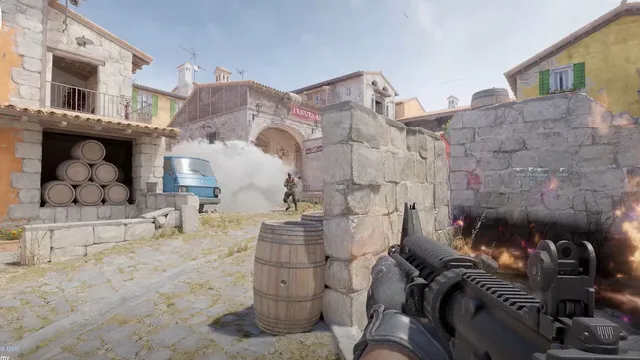
On September 27, 2023, Counter-Strike 2 launched on the Source 2 engine. Volumetric smoke grenades. Sub-tick rate systems. Updated graphics. And something unprecedented: CS:GO was literally deleted from Steam, replaced entirely by CS2.
The community reaction was immediate: “Quit Valorant. It’s done.”
Na’Vi won the first CS2 Major in Copenhagen 2024. Team Spirit entered 2025 as champions. Vitality and ZywOo posted the greatest single season in CS history — nine tournament wins, two Major trophies, a thirty-match win streak. M0NESY emerged as the next-gen AWP prodigy, drawing comparisons to prime kennyS. The game continues to evolve.
But the formula remains the same. Five versus five. Terrorists versus counter-terrorists. Buy rounds and eco rounds. No perks. No hero abilities. No gimmicks. Everyone starts equal. If you die, you got outplayed. Period.
Why We Love It
Counter-Strike has outlived the CPL, the CGS, multiple engines, and countless games that were supposed to kill it. It survived the Source split, gambling scandals, and match-fixing. Players who started on CRT monitors in 2001 have watched their children start playing CS2.
The formula hasn’t changed in twenty-five years because it didn’t need to. The players refined it. The community built it. Valve kept the lights on.
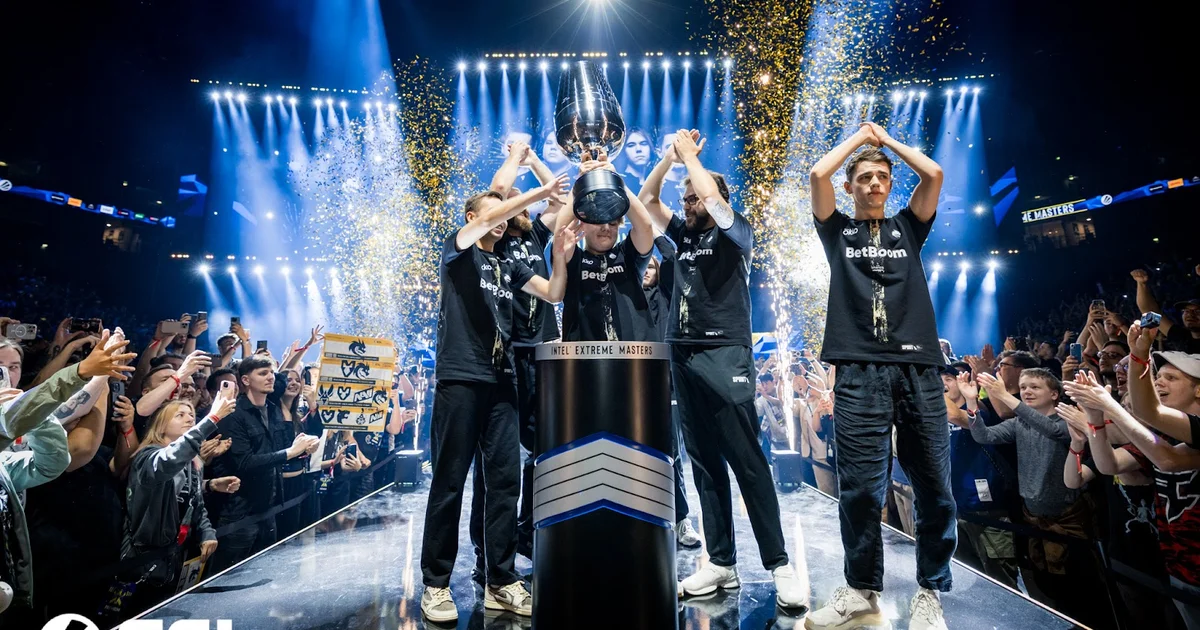
The graffiti on the walls of Mirage and Cache aren’t just developer art. They’re monuments to moments that gave millions of people chills. From a Half-Life mod created by a university student to stadiums holding fifteen thousand screaming fans — this is the longest, wildest, most beautiful dynasty in competitive gaming.
This is not just a game. This is Counter-Strike.
Discussion