
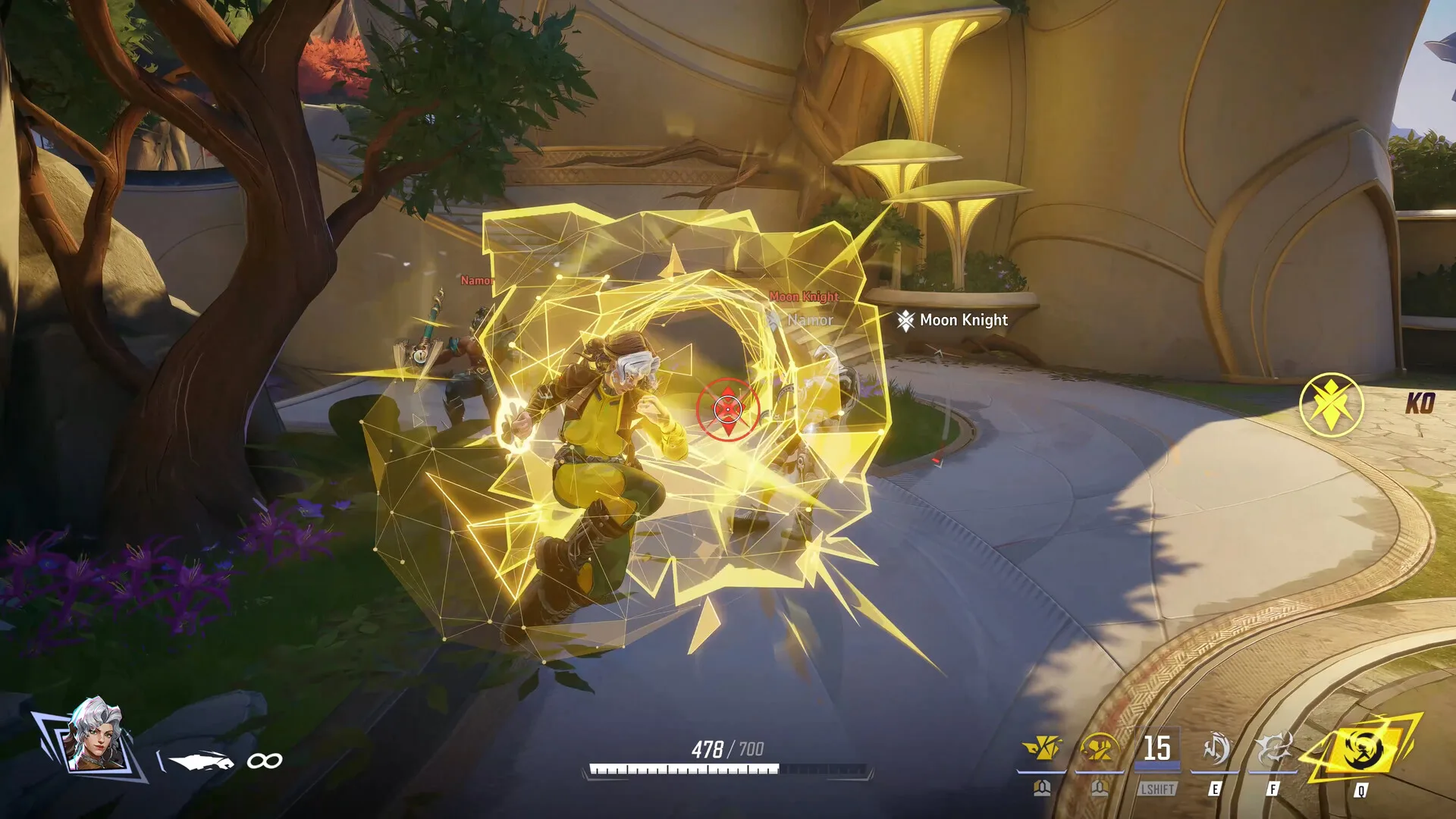
Marvel Rivals Season 2 is here, and NetEase is swinging hard at the problems that defined Season 1’s competitive experience. Separate solo and group queues, a performance-weighted ranking system, two new heroes, and a balance pass that reads like they actually looked at data instead of Reddit threads. On paper, this is everything the community asked for.
But “on paper” and “in practice” are different things in competitive matchmaking. After spending the first week grinding the new ranked ladder, I have thoughts on what’s working, what’s not, and whether this is the course correction Marvel Rivals needed to cement itself as a serious competitive title.

The Ranked Split: Solving the Right Problem
The headline change is the separation of solo queue and group queue into distinct ladders with independent MMR tracking. This was the single most requested competitive feature since launch, and for good reason.
Season 1’s ranked experience had a fundamental fairness problem. Solo players were routinely matched into games against coordinated stacks running rehearsed compositions. You could be the best mechanical player in the lobby and still get steamrolled by a three-stack with voice comms and practiced rotations. Your rank reflected whether you happened to queue at the same time as premade groups more than it reflected your actual skill.
The fix is straightforward: solos play against solos, groups play against groups, and each has its own ranking. Your solo rank now means something. It reflects your ability to win with random teammates against other random teams — which is what most players assumed it meant all along.
This is the same problem that plagued Overwatch for years. Blizzard tried role queue, open queue, priority passes, and a half-dozen matchmaking tweaks before eventually landing on a similar solution. NetEase got there faster, which is either smart design or the benefit of learning from someone else’s mistakes. Probably both.
The early results are promising. Solo queue games feel noticeably more balanced in the middle ranks. The coin-flip feeling of “did the matchmaker put me against a stack or not” is gone, replaced by games where individual performance actually swings outcomes. That’s what competitive should feel like.
Performance-Weighted SR: Good Idea, Tricky Execution
Season 2 also adjusts how rank points are distributed. In lower ranks, personal performance carries more weight — damage, healing, objective time, and a handful of hero-specific metrics all factor into your SR gains and losses. At higher ranks, the system shifts toward pure win/loss, keeping the team-oriented nature of competitive play intact where it matters most.
The intent is clear: help stuck players climb out of ranks they don’t belong in without turning high-level play into a stat-padding contest. In theory, this means a Diamond-skilled player stuck in Gold because of bad teammates will climb faster than before.
In practice, it’s more complicated. Performance metrics in team games are notoriously hard to weight correctly. A support player who enables three kills through utility and positioning doesn’t show up in the stat sheet the way a DPS player fragging out does. NetEase says they’ve accounted for role-specific metrics, but the community is already raising concerns about whether support and tank players are being rated fairly compared to damage dealers.
This is worth watching. If the performance system subtly favors flashy DPS stats over impactful tank and support play, it will warp the ranked experience in ways that take months to surface. The data will tell the story — NetEase just needs to be listening.
Emma Frost and Human Torch: Two Different Design Philosophies
The new hero additions tell you a lot about where NetEase’s head is at. Emma Frost and Human Torch are both high-profile Marvel characters, but their kits serve very different competitive purposes.
Emma Frost leans into the control and disruption space. Her kit has clear moments of power that demand team coordination to maximize, with enough counterplay windows that she doesn’t feel oppressive in ranked. She slots into existing compositions without demanding that teams rebuild around her, which is exactly what you want from a new competitive hero.
Human Torch is the more mechanically demanding addition. High mobility, strong damage output, and a kit that rewards aggressive positioning and cooldown management. He’s the kind of hero that will look average in most hands and terrifying when a skilled player picks him up. The skill ceiling is high, the floor is reasonable, and the counterplay is readable.
Neither hero launched in a broken state. This matters more than people realize. The Overwatch cycle of “release overpowered hero, watch everyone complain for two weeks, nerf into the ground” trained an entire generation of hero shooter players to dread new characters. NetEase avoiding that pattern builds long-term trust in the competitive ecosystem.
The Balance Pass: Data-Driven, But Missing Some Targets
The Season 2 balance changes hit most of the right targets. Support healing throughput was tightened to reduce the unkillable deathball compositions that dominated high-rank Season 1 play. Several crowd control durations were shortened — a change that addresses feel as much as balance. An ability doesn’t have to be overpowered to be miserable to play against, and reducing CC duration is one of the smartest design levers available.
The damage role adjustments are more measured. A few outlier heroes had their burst combos reined in without gutting their overall effectiveness. This is the right approach — surgical nerfs rather than the sledgehammer balance patches that kill hero identity.
Where the balance pass falls short is the team-up system. Season 2 doesn’t meaningfully address the passive bonuses that certain hero combinations receive, which continues to create situations where optimal team composition is partially dictated by arbitrary pairings rather than strategic decision-making. This was a known issue in Season 1, the community has been vocal about it, and the silence in the patch notes is conspicuous.
It’s not a deal-breaker. The team-up bonuses aren’t large enough to override skill differences in most games. But at the highest levels of play, any unearned advantage warps the meta, and NetEase leaving this untouched suggests they either disagree with the criticism or aren’t ready to rework the system yet. Neither answer is great.
Community Reception: Cautiously Optimistic
The community response has been more positive than usual for a major competitive update — which in gaming terms means the complaints are specific rather than existential. Players aren’t questioning whether Marvel Rivals can be competitive anymore. They’re debating the details of how competitive it should be.
The biggest ongoing concern is queue health. Splitting the player base between solo and group queues means longer wait times in at least one mode, and probably both during off-peak hours. Early reports suggest group queue times have increased noticeably in Diamond and above, where the player pool is already smaller. If queue times keep climbing, NetEase will face the uncomfortable choice between reverting the split and accepting that high-rank group play has ten-minute waits.
There’s also an emerging discussion about the ranked map rotation. Season 2 curates the competitive map pool down to seven maps, removing the weaker offerings while the team iterates on them. This is smart design, but it also means less variety in a game mode where you’re playing hundreds of matches per season. By week two, the seven-map rotation was already drawing “stale” complaints from grinders pushing top ranks.

The Bigger Picture
Marvel Rivals Season 2 matters beyond its own ecosystem. The hero shooter space is more competitive than it’s been since Overwatch’s peak, and how NetEase handles the transition from “popular new game” to “established competitive platform” will define whether Marvel Rivals earns a permanent spot among the best PVP games in 2026 or follows the trajectory of games that launched hot and faded when the next shiny thing arrived.
The ranked overhaul is a strong step. Separate queues, performance-weighted SR, curated maps, and balanced hero releases are all correct decisions. But competitive games live and die on iteration speed. The real test isn’t whether Season 2 launched well — it’s whether NetEase responds quickly when the data shows what needs adjusting mid-season.
If the team-up system gets addressed, queue health holds, and the performance metrics prove fair across roles, Marvel Rivals has a real shot at being the hero shooter that finally gets competitive right on the first try. If those issues linger into Season 3, the window starts to close.
For now, the answer to “is it enough?” is: almost. And in competitive gaming, “almost” is closer than most games ever get.
Discussion