
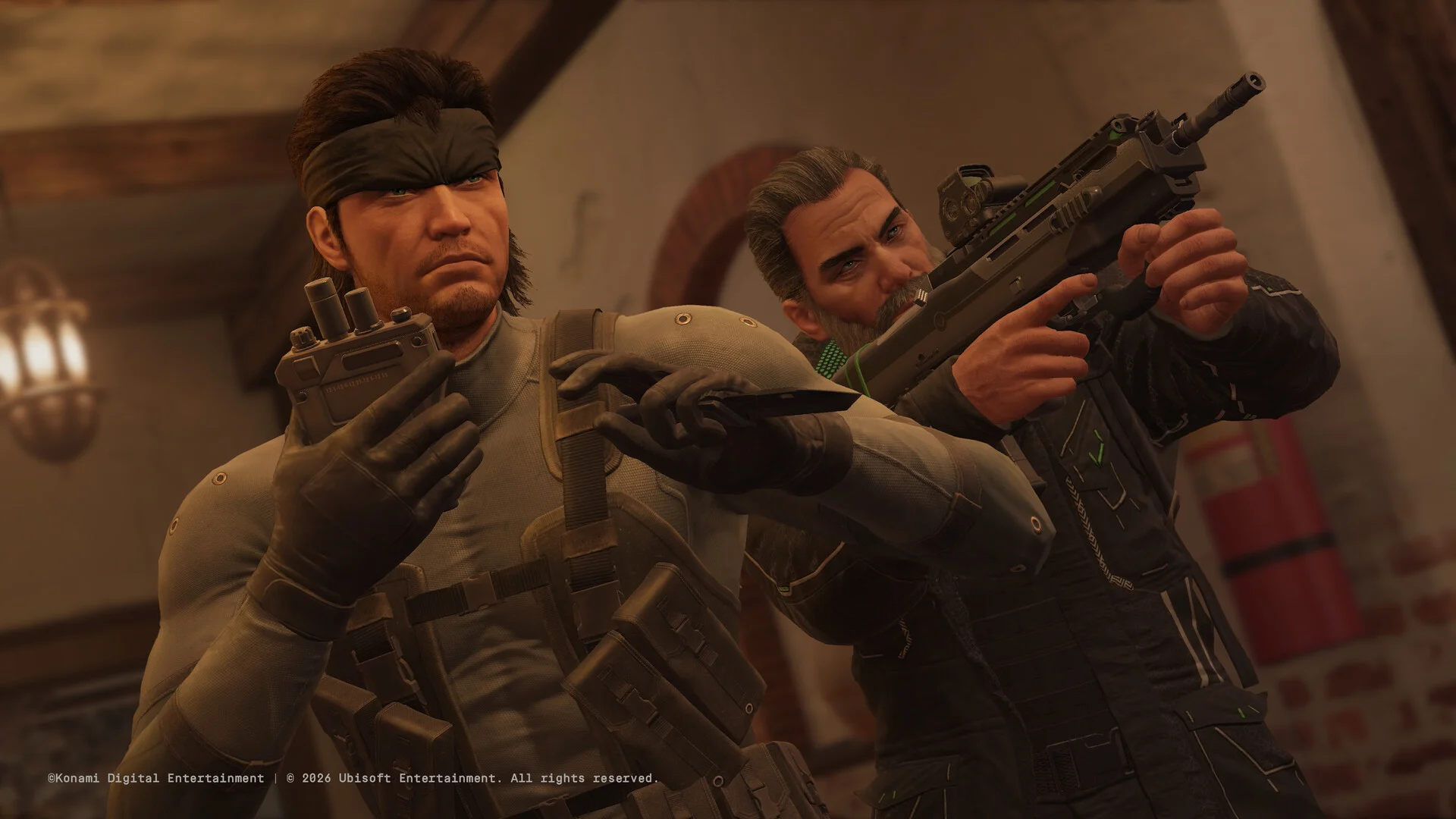
Tom Clancy co-founded Red Storm Entertainment in 1996. The studio shipped the original Rainbow Six in 1998 and essentially invented the tactical shooter genre. Every round of Siege you’ve ever played, every clutch on Coastline, every pixel-angle hold on Consulate — it all traces back to that studio in Cary, North Carolina.
Ubisoft just shut it down. 105 people lost their jobs. A “small number” are being offered transfers. The rest are gone, and so is three decades of institutional knowledge about what makes Rainbow Six Rainbow Six.
If you’re still grinding ranked in Siege, you need to understand what this actually means. Not tomorrow — but twelve months from now.
What Happened
Ubisoft confirmed the closure of Red Storm Entertainment as part of its ongoing corporate restructuring. The studio had been a key support team on Rainbow Six Siege since launch in 2015, contributing to map design, game systems, balancing, and live-service content alongside the lead team at Ubisoft Montreal.
This isn’t a surprise if you’ve been paying attention. Ubisoft has been in full-blown survival mode since late 2023:
- XDefiant cancelled in late 2024, taking studios in San Francisco and Osaka with it — over 300 jobs gone
- Star Wars Outlaws underperformed at retail, intensifying financial pressure
- Stock price hovering near 10-year lows, with Tencent and Guillemot family buyout rumors refusing to die
- The Division Heartland cancelled, Ghost Recon’s future uncertain, the entire Tom Clancy brand hollowed out
- 30,000+ gaming industry jobs lost across 2023-2025, with Ubisoft among the worst offenders
Red Storm is the latest casualty. It won’t be the last.
Why This Isn’t “Just Another Support Studio”
Let’s be precise about what Ubisoft actually killed here.
Red Storm wasn’t some outsource house bolting cosmetics onto a live game. This studio co-created the franchise. They built the foundational design philosophy of Rainbow Six — the emphasis on preparation over reflexes, on information warfare, on making the thinking player feel like a god. That DNA carried forward into Siege and is the reason the game carved out a competitive identity distinct from Counter-Strike and every arena shooter that came after it.
On Siege specifically, Red Storm handled:
- Map design and iteration — the spatial puzzle-boxes that make Siege’s competitive gameplay unique
- Systems-level work — the unglamorous plumbing that keeps a complex game functional
- Balancing support — feeding data and design perspective into operator tuning
- Live-service content — the ongoing grind of keeping a 10-year-old game feeling maintained
You don’t replace that with a hiring spree. You can’t download 30 years of tactical shooter philosophy from a wiki. When those 105 people walked out the door, they took knowledge that doesn’t exist anywhere else.
The Competitive Impact
Here’s the honest breakdown, split into what you’ll notice and what you won’t — until it’s too late.
Short-Term: Probably Fine
Content pipelines are planned seasons in advance. Whatever Siege is shipping in the next two seasons was likely locked before this closure. Ubisoft Montreal is still the lead studio and still has people working on the game.
You won’t log in tomorrow and feel the difference. That’s the insidious part.
Medium-Term: This Is Where It Hurts
Content velocity is going to slow even further. Siege already went from shipping multiple new maps and operators per year to a visibly reduced cadence. Map reworks replaced new maps. Seasonal events got recycled. The pipeline was already thin. Now remove an entire studio’s worth of contributors.
Quality-of-life work is going to suffer. Bug fixes, anti-cheat iteration, UI improvements, the thousand small things that keep a competitive game from rotting — that’s exactly the kind of work support studios handle. When those resources evaporate, the decay doesn’t announce itself. You just start noticing more bugs lingering for longer, more exploits going unpatched, more “known issues” lists that never get shorter.
Map quality could degrade. Red Storm’s map design contributions were critical. Siege lives and dies on its maps — they’re the competitive DNA of the game in a way that’s more fundamental than any individual operator. If the team producing and iterating on maps just got significantly smaller, the ranked experience is going to feel it.
Long-Term: The Writing on the Wall
For ranked and competitive players, the equation is simple: a game needs sustained investment in balancing, anti-cheat, map quality, and operator design to remain competitively viable. Every resource cut makes that harder.
The esports ecosystem was already on life support. Ubisoft restructured the Siege Invitational and downsized regional leagues in 2024. Prize pools got cut. Broadcast hours got reduced. Red Storm’s closure doesn’t directly touch esports, but it’s another data point in the same trend: Ubisoft is deprioritizing Siege as a competitive tentpole.
If you’re a Siege pro or aspiring pro, your window is closing. If you’re a ranked grinder who loves this game, start paying attention to the patch cadence over the next few seasons. That’ll tell you everything.
This Is Harvest Mode
Let’s call it what it is.
Ubisoft isn’t investing in Rainbow Six Siege’s future. They’re harvesting it. The store will keep selling skins. The battle pass will keep rotating. Operators will still trickle out. But the ambition — the willingness to pour resources into making the competitive experience meaningfully better — that’s dead.
We’ve seen this playbook before:
- Overwatch under late-era Blizzard, where content slowed to a crawl while the cosmetic shop thrived
- Battlefield under EA, where the live service promises evaporated and studios got gutted
- Every live-service game that transitions from “grow the playerbase” to “extract from the remaining playerbase”
The lights stay on. The revenue keeps flowing. But the game stops getting better in the ways that matter to competitive players. Balance patches get less frequent. New content gets less ambitious. The community slowly bleeds out as the most invested players recognize they’re playing a game that’s stopped trying to earn their loyalty.
That is what’s starting right now for Siege. Not a shutdown. Not a “dead game” moment. Something worse — a slow, invisible decline where the game you love is still technically there, but the people and resources that made it special are gone.
The Bigger Picture: Ubisoft Is Killing the Tom Clancy Brand
Zoom out for a second. Look at the state of the Tom Clancy franchise:
- The Division Heartland — cancelled
- Ghost Recon — future uncertain, no announced title
- XDefiant — dead
- Red Storm Entertainment — the literal studio Tom Clancy co-founded — closed
- Rainbow Six Siege — entering resource starvation
The Tom Clancy brand used to mean something specific in gaming: tactical, methodical, thinking-player-first design. It was the antithesis of twitch shooters and ability spam. Red Storm was the custodian of that philosophy.
Now the last people who understood what Tom Clancy games were supposed to feel like have been shown the door. What’s left is a brand name on a corporate balance sheet, managed by executives who see “Tom Clancy” as an IP to monetize rather than a design philosophy to uphold.
Ubisoft didn’t just close a studio. They severed Rainbow Six from its roots. Whatever Siege becomes from here, it won’t have the people who understood why it mattered in the first place.
What to Watch For
If you’re a Siege player trying to gauge whether the game still has a future worth investing your time in, here’s your checklist over the next 6-12 months:
- Patch cadence: Does the time between meaningful balance updates increase?
- Bug persistence: Do known issues linger longer? Do exploits take more seasons to fix?
- Map output: Do we get new maps, or just recycled reworks and reskins?
- Operator design ambition: Are new operators pushing the game forward, or are they safe, low-risk additions?
- Anti-cheat updates: Does the cheating problem get worse at high ranks?
- Esports investment: Does Ubisoft recommit to competitive Siege, or does the infrastructure keep shrinking?
If the answer to most of those trends negative, you’ll know. The game won’t die with a bang. It’ll die with a patch note that’s half the length it used to be, shipped two weeks later than it should’ve been, fixing half the things it needed to.
105 People Deserved Better
Before we wrap this in competitive analysis and industry trends, let’s be clear: 105 people just lost their jobs. Developers who poured years of their careers into a game millions of people love. People with mortgages and families and a right to be furious at a corporate structure that treated them as line items to be optimized away.
The “small number” being offered transfers is Ubisoft’s way of putting a compassionate face on a purely financial decision. The reality is that a studio with a 30-year legacy and direct lineage to one of gaming’s most important franchises was deemed expendable.
If you’ve ever clutched a 1v3 in ranked, thank a Red Storm developer. They built the playground you learned to fight in.
The Beginning of the End
Siege isn’t dead today. It might not be dead next year. But this is the clearest signal yet that Ubisoft has decided Siege’s best days are behind it — and is allocating resources accordingly.
For competitive players, the question isn’t whether to quit tomorrow. It’s whether you’re willing to commit another thousand hours to a game whose parent company just gutted the team responsible for keeping it great. That’s a bet you’ll have to make with your own time.
Just know what you’re betting on. The house that built Rainbow Six is gone. What’s left is a product, not a passion project — and in competitive gaming, that difference is everything.
Discussion