
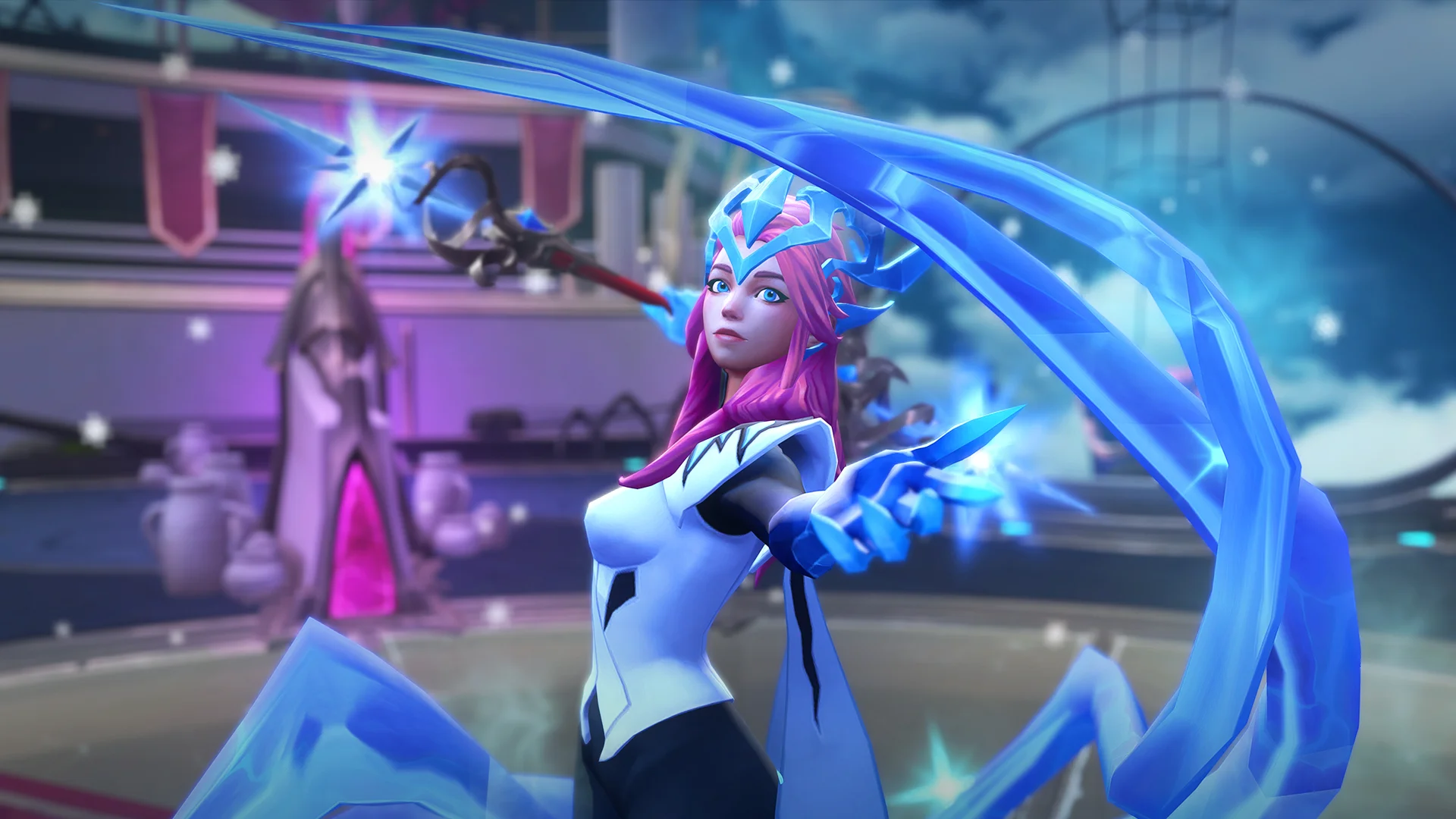
I’ve been thinking about Battlerite a lot lately. Not because anything new happened — the game’s been effectively dead since 2020, servers running on life support while Stunlock moved on to other projects. (If you want to see what the game actually was, I wrote a complete champion reference and a deep dive into its predecessor, Bloodline Champions.) But with a handful of indie arena brawlers now in development, the question feels relevant again: why did Battlerite fail when the gameplay was so good?
It’s a question worth digging into. Because if arena PVP is going to have a future, someone needs to understand what killed its best shot.
The Gameplay Was Never the Problem
Let me be clear about something up front: Battlerite’s core combat was exceptional. I’d argue it’s the best PVP combat any game has delivered in the last decade, and I’ll die on that hill.
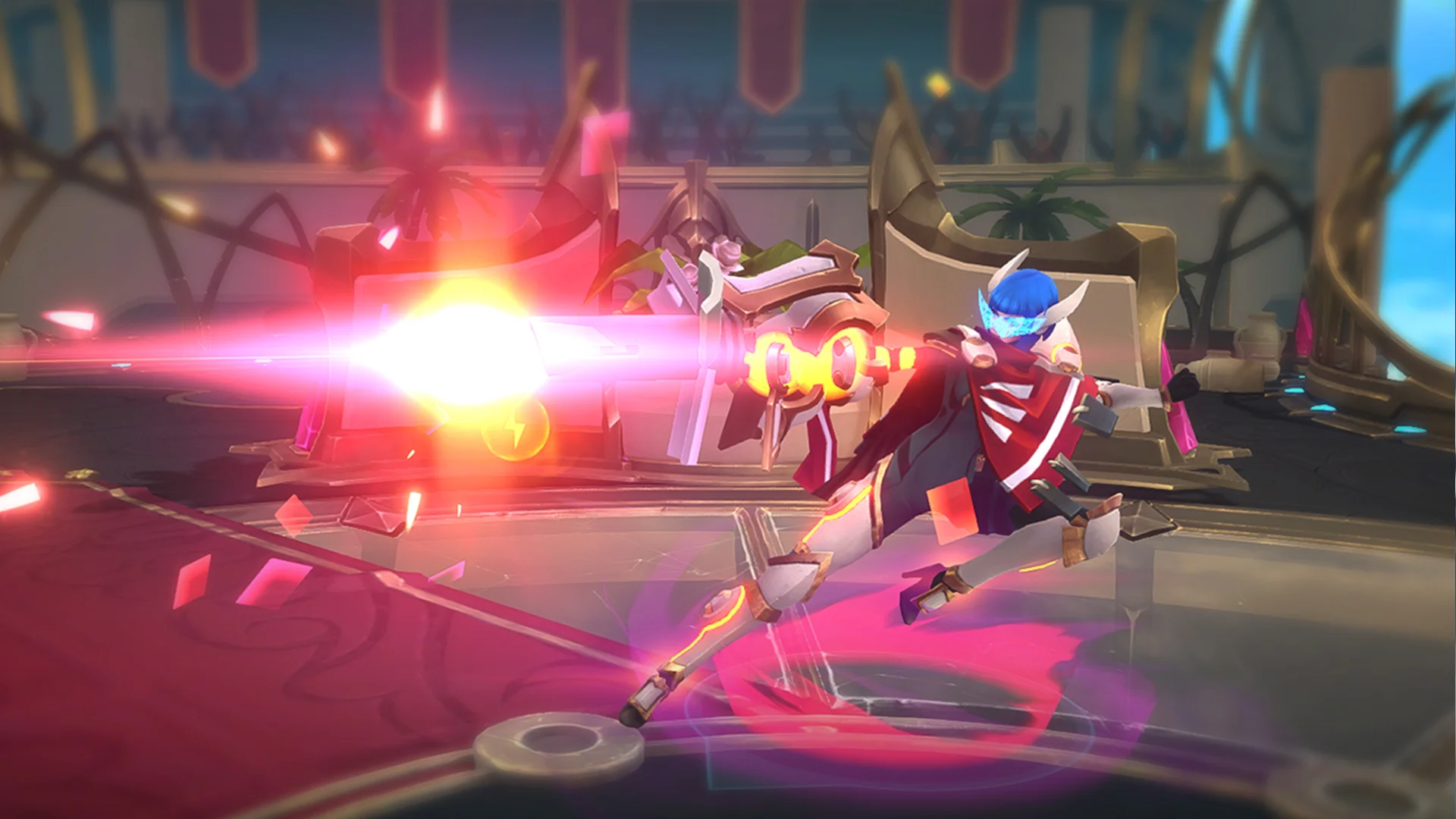
Every ability in the game was a skill shot. No tab targeting, no auto-attacks that track enemies. You aimed everything. Your heals, your shields, your escapes — all of it. This meant that every exchange between two players was a genuine test of mechanical skill and prediction.
The counter system was the crown jewel. Instead of a generic “block” button, most champions had a counter ability that absorbed the next attack and triggered a response. The mind games around baiting and punishing counters gave the game a fighting game depth that no other team PVP game has replicated.
And the round structure kept things tight. Best of five, two or three minutes per round, with a sudden death mechanic that forced fights to a conclusion. No 40-minute slogs. No snowballing. Every round was a clean reset where skill was the only advantage.
So What Went Wrong?
The Battle Royale Pivot
This is the one everyone talks about, and for good reason. In early 2018, with PUBG and Fortnite rewriting the rules of what a multiplayer game could be, Stunlock Studios announced Battlerite Royale — a standalone battle royale mode.
The timing couldn’t have been worse. The core game was at a critical point where it needed more champions, ranked improvements, and spectator tools to sustain its competitive community. Instead, the dev team split their already limited resources to chase a trend.
Battlerite Royale launched as a separate $20 product. It satisfied neither the existing playerbase — who saw it as abandonment — nor the BR crowd, who had no interest in learning a top-down arena brawler’s worth of mechanics just to play a worse version of the genre they already had. It was dead on arrival, and the damage to community trust was permanent.
But here’s the thing people get wrong: Battlerite Royale didn’t kill Battlerite. The game was already in trouble before the announcement. The player count had been declining for months. The BR pivot was a symptom of a deeper problem, not the cause.
The New Player Cliff
Arena brawlers have a fundamental onboarding problem that Battlerite never solved. In a MOBA, a new player can hide behind their team for 15 minutes, farm creeps, and gradually learn the game before teamfights break out. In a hero shooter, you can contribute with basic aim even if you don’t understand ability interactions.
Battlerite had no such safety net. You loaded into a match, and within seconds you were in a 2v2 or 3v3 fight where every ability mattered. A new player facing someone with 200 hours was going to get completely destroyed, and the game gave them very little to understand why.
The tutorial taught you which buttons to press. It did not teach you the game. Cooldown trading — the single most important concept in arena PVP — was never explained. The idea that you should bait an enemy’s escape before committing your own, or that you should track cooldown windows to find openings, or that positioning near the center orb was more important than chasing kills — none of this was communicated.
I watched friends try Battlerite. The pattern was always the same: they’d play three matches, get bodied, say “this is cool but I have no idea what’s happening,” and never open it again. The game was bleeding new players faster than it could acquire them, and no amount of marketing could fix a retention problem that fundamental.
The Free-to-Play Transition That Wasn’t
Battlerite launched in Early Access as a $20 buy-to-play game, then went free-to-play in November 2017. On paper, this should have been the influx the game needed. And it was — briefly. The game hit its all-time peak of 44,000 concurrent players.
But the F2P model was poorly designed. The champion unlock system was a grind that discouraged experimentation, and the cosmetic monetization wasn’t compelling enough to sustain the business. More importantly, the new players who flooded in hit the same onboarding cliff. Without a path to understanding, they churned out just as fast as they arrived.
Within two months, the player count was back to pre-F2P levels. The biggest possible growth lever had been pulled, and it hadn’t worked.
No Esports Infrastructure
Battlerite’s competitive scene was grassroots and passionate, but the game never developed the spectator tools, tournament infrastructure, or developer support needed to make esports viable. In 2017-2018, games like Overwatch and League of Legends were pouring millions into esports ecosystems. Battlerite had community-run tournaments on Battlefy.
This matters more than people realize. A visible esports scene serves as aspirational content — it gives players a reason to improve, meta knowledge to consume, and highlights to share. Without it, the game existed in a content vacuum where the only reason to play was the gameplay itself. And for most people, that wasn’t enough.
What the Genre Needs to Get Right
Battlerite proved that arena PVP combat can be incredible. The question isn’t whether the formula works — it’s whether anyone can build a sustainable game around it. Here’s what I think matters:
Teach the real game, not just the controls. The next arena brawler needs to explain cooldown trading, spacing, and resource control within the first hour. Not through text boxes — through guided gameplay that makes you feel why these concepts matter. If your tutorial doesn’t teach players to bait counters and punish whiffs, you’ve already lost.
Don’t need 50,000 concurrent players to function. Battlerite’s queue times got painful below 5,000 CCU. The next game needs matchmaking that works with smaller numbers — whether that’s more flexible team sizes, AI backfill, or creative queue structures. An indie PVP game cannot depend on AAA-level player counts.
Commit to the vision. When your game is struggling, the temptation to pivot is enormous. But the players who are there — the ones who love what you’ve built — are your only real asset. Chasing trends burns their trust, and trust is the one thing you can’t buy back.
Build content loops beyond matches. Pure PVP games live and die by their player count. A progression system, challenges, or single-player training modes that give people reasons to launch the game even when queue times are long can smooth over the valleys.
The Genre Isn’t Dead
I still think about Battlerite because the feeling of outplaying someone in that game — reading their counter, baiting their escape, landing the kill combo — is something no other game has replicated. It’s been years, and nothing has filled that gap.
The demand is still there. “Battlerite alternative” is still a regular search term. Arena brawler communities on Reddit and Discord are still active, still waiting. A few indie projects are in the works — Nebulagon, among others — and whether any of them crack the code remains to be seen. But the genre deserves another shot.
Discussion