
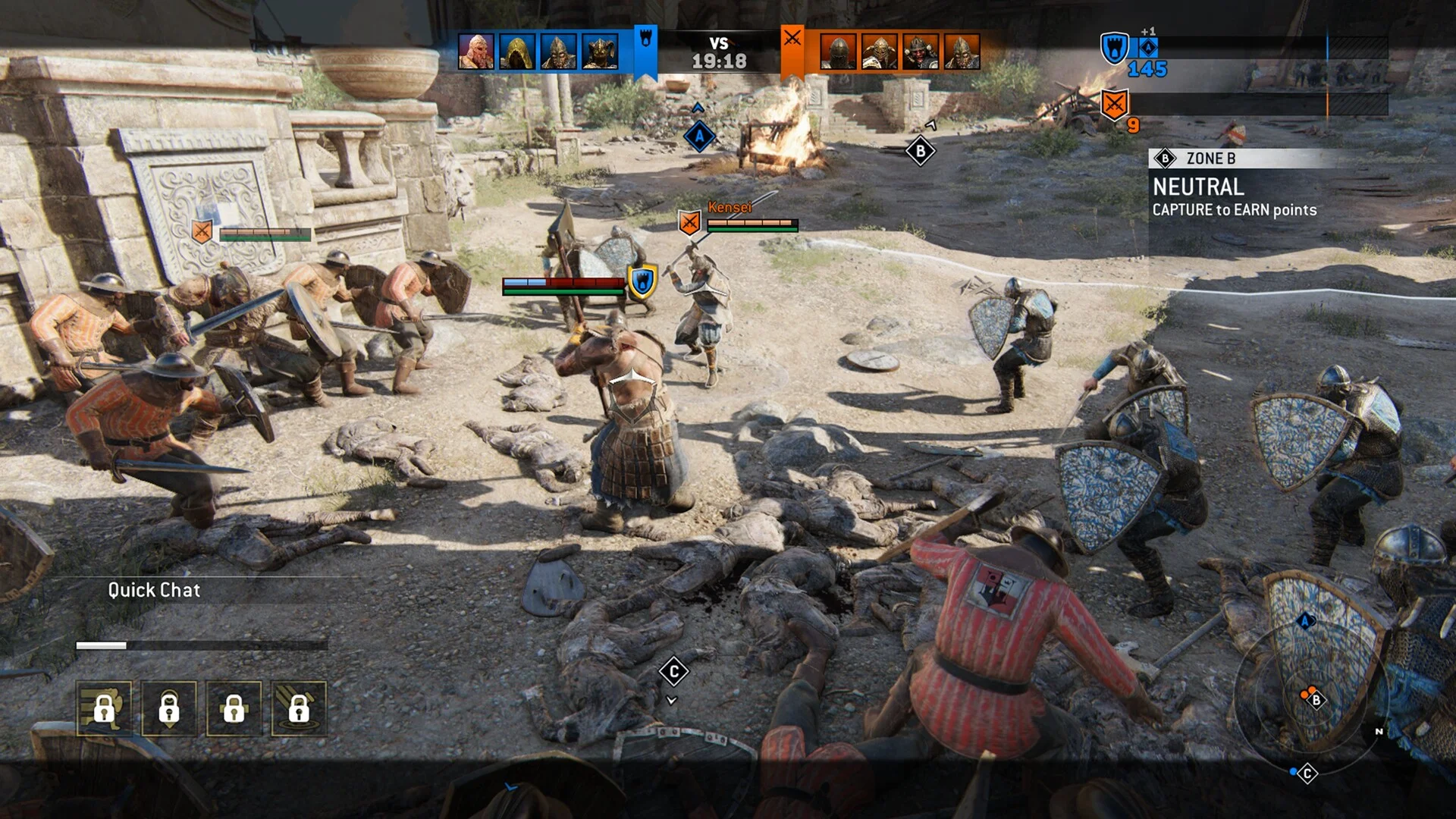
I need to talk about For Honor. Not because it’s new — it launched in 2017 and Ubisoft has been quietly supporting it ever since. But because it built the most unique PVP combat system in any multiplayer game, and it doesn’t get the credit it deserves.
Most PVP combat falls into a few buckets: aim-based (shooters), ability-based (MOBAs, arena brawlers), or input-based (fighting games). For Honor created a fourth category: directional melee combat. And nearly a decade later, nothing else has attempted it.
The Art of War System
For Honor’s core mechanic — the Art of War system — works like this: your character holds their weapon in one of three guard positions (left, right, or top). To attack, you choose a direction and swing. To block, you match the attacker’s direction. It’s rock-paper-scissors with three options and real-time execution.
That sounds simple. It is not simple.
The depth comes from everything layered on top of that core. Each of the 30+ heroes has unique attack chains, unblockable moves, bashes, dodge attacks, and special mechanics. Some can feint heavy attacks into guard breaks. Some have full-block stances that parry all directions at once but leave them vulnerable to guard breaks. Some have hyper armor that lets them trade hits.
The result is a game where every fight is a conversation. You throw an attack to see how they react. They dodge. You note that. Next time, you feint the attack and guard break their dodge. They adapt and start parrying instead. You adapt and start using unblockables. The back-and-forth is constant and personal in a way that no other multiplayer game achieves.
Why Nobody Talks About It
For Honor has a visibility problem, and it’s partially self-inflicted.
The launch was rocky. Peer-to-peer networking, balance issues, and a gear stat system that gave paid players advantages drove away a huge chunk of the initial player base. The game earned a reputation for being unfair that it never fully shook, even after Ubisoft fixed every one of those problems.
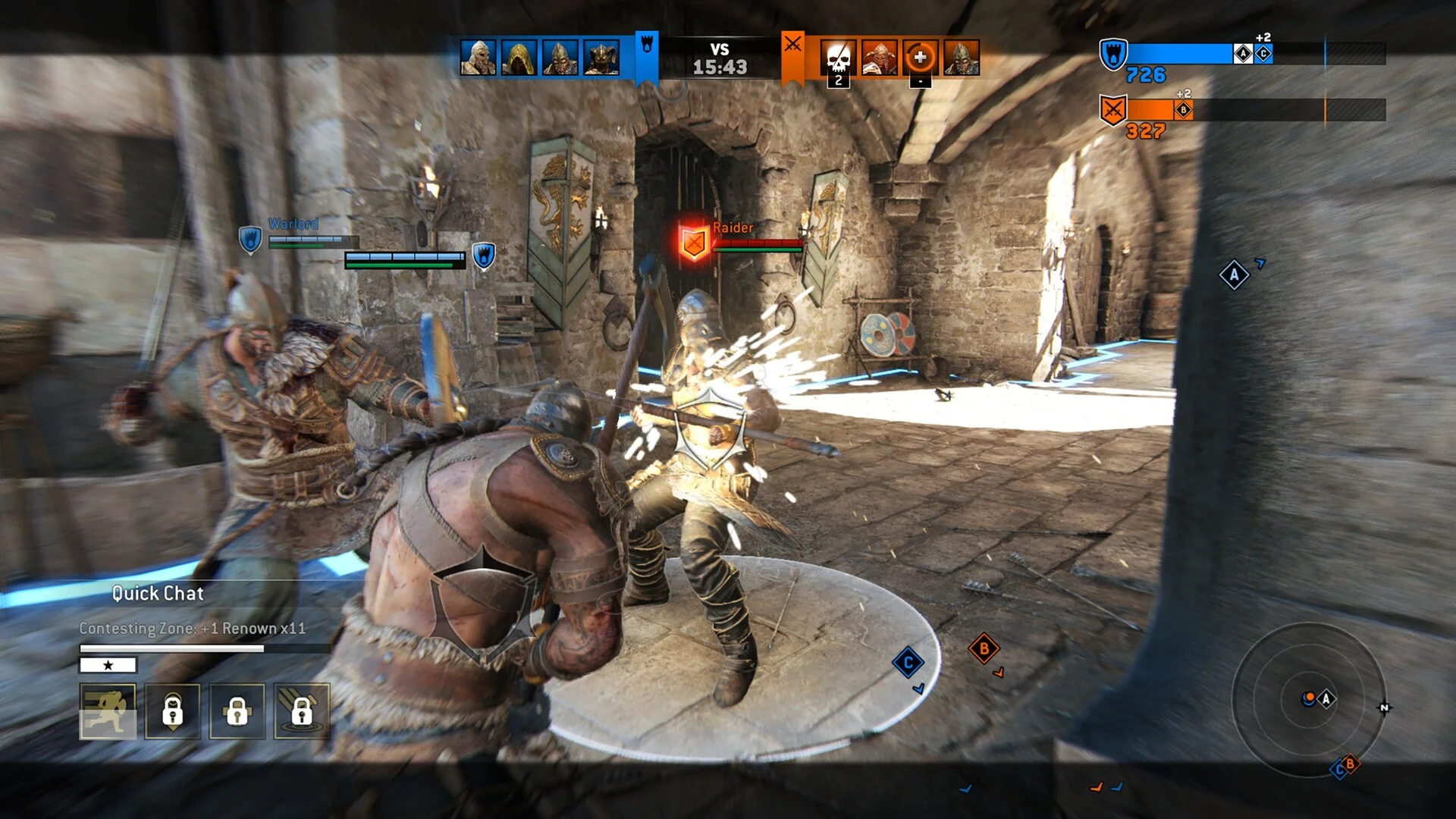
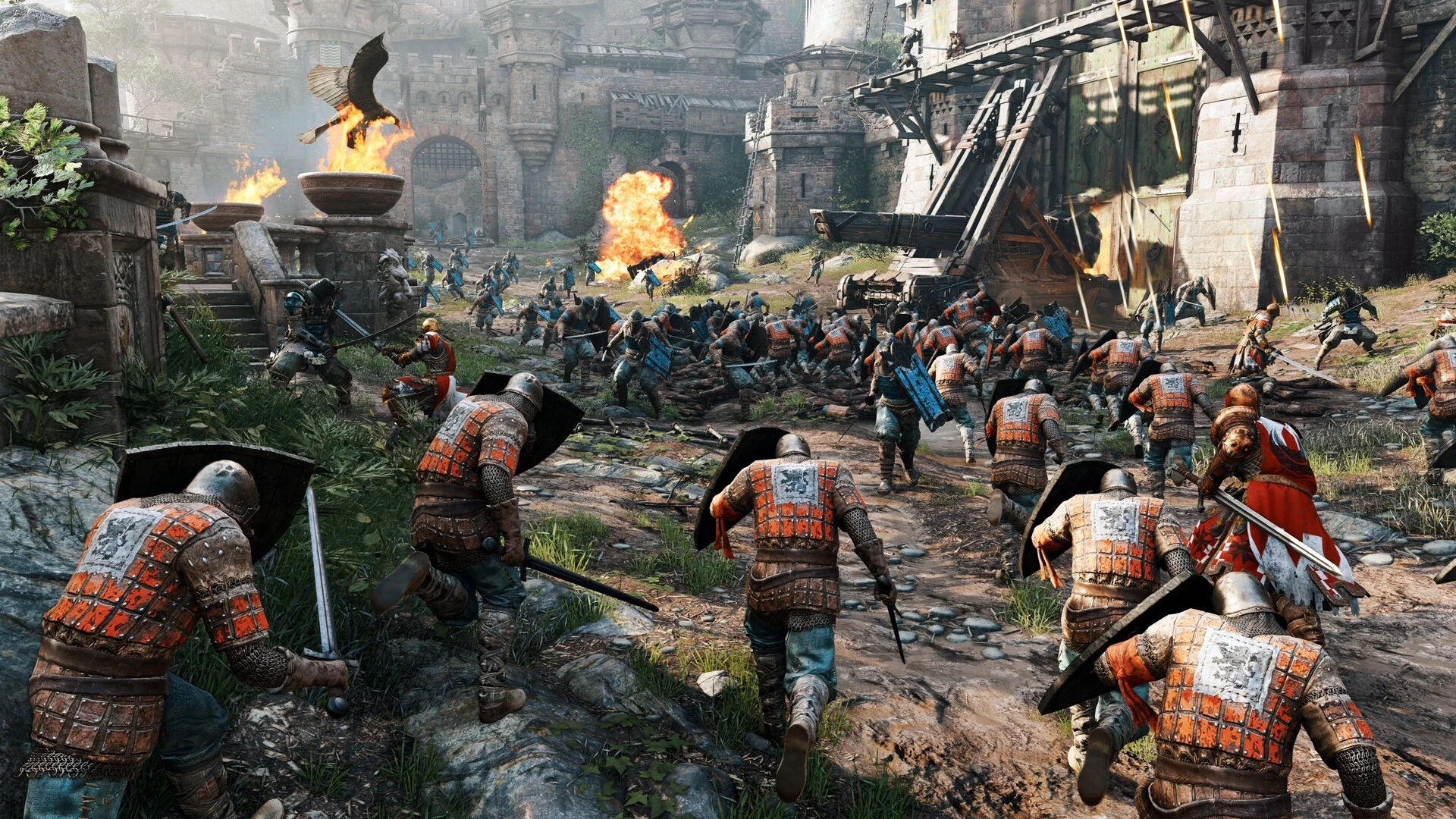
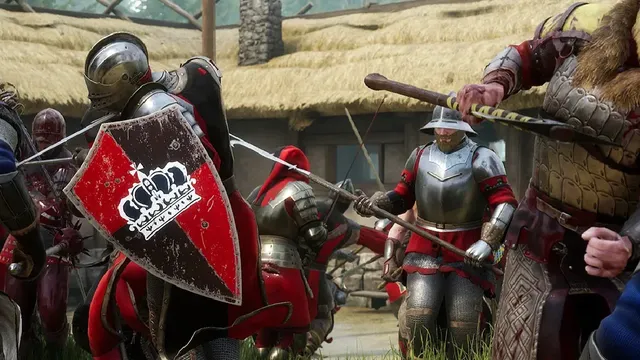
The 4v4 modes muddy the perception. For Honor’s marquee modes are Dominion (4v4 objective) and Breach (4v4 siege). These are chaotic, teamfight-heavy experiences where the elegant 1v1 combat gets obscured by ganks, feats (special abilities), and environmental kills. Most new players experience For Honor through these modes and think the game is about spamming attacks in group fights.
The actual competitive heart of the game is in duels (1v1) and brawls (2v2). In these modes, with no feats and no ganks, For Honor’s combat system shines. A high-level duel in For Honor is as tense and skill-expressive as a tournament set in Guilty Gear or a 1v1 in Battlerite. But the game doesn’t push these modes as its primary experience, so most players never discover this.
It’s hard to watch. Fighting games have solved spectating — the camera angle, the health bars, the combo counter all communicate what’s happening at a glance. For Honor’s third-person camera makes it harder to parse for viewers who don’t play the game. You need to understand the guard system to appreciate a well-timed parry, and that understanding only comes from playing.
What For Honor Gets Right
Despite the visibility issues, For Honor does several things better than any other PVP game:
Every fight feels personal. Because you’re directly reading and reacting to a specific opponent, every duel develops its own meta. You start recognizing their habits. They start recognizing yours. By the third round, you’re both playing a completely different game than you were in the first. This is the magic of PVP distilled to its purest form.
Defensive play is interesting. Most PVP games make defense boring — you block, you dodge, you wait. For Honor makes defense active and rewarding. A well-timed parry doesn’t just prevent damage; it gives you a guaranteed punish. Deflects (tighter timing than parries) give even bigger rewards. The game rewards reading your opponent’s offense and choosing the right defensive response.
The hero variety is enormous. With 30+ heroes across four factions, the character diversity is staggering. And each hero genuinely plays differently — not just different flavors of the same thing, but fundamentally different approaches to the core combat system. Playing Warden (straightforward bash mix-ups) is a completely different experience from playing Shaolin (stance-based flow attacks) or Pirate (unblockable pressure chains).
Continuous support. Ubisoft has kept updating For Honor for seven years. New heroes, reworks of old heroes, balance patches, seasonal events, and crossovers. This level of sustained support for a non-free-to-play game is rare and worth acknowledging.
The Lessons for PVP Design
For Honor’s combat system holds a lesson that applies far beyond its own genre: the best PVP interactions are the ones where you’re reading your opponent, not just executing your own plan.
In many competitive games, the skill test is primarily about your own execution — can you hit your shots, can you execute your combo, can you land your abilities? For Honor flips this: the primary skill test is reading the other player. What are they going to do? Why did they do that? What will they do if I do this?
This is the same principle that makes arena brawlers compelling. The counter-baiting, the cooldown tracking, the positional reads — these are all forms of opponent reading. The game is not a mechanical challenge; it’s a human puzzle. The other player is the content.
For Honor proved that a mainstream game can be built entirely around this principle. It just had the bad luck of launching with problems that overshadowed its best ideas. If someone made a For Honor-style game today — with rollback netcode, free-to-play, and a stronger competitive push — I genuinely think it would be massive.
Until that happens, For Honor is still there. Still getting updates. Still having the most unique PVP combat in gaming. And still criminally underrated.
Discussion